Real School Font Review
It was a quiet Tuesday morning, and I found myself staring at a blank brand board, trying to figure out how to make a new educational startup feel approachable and fun. The client wanted something that felt like a classroom without being too childish. That’s when I pulled up Real School, a cute and simple lettered display baby font, and it immediately caught my eye.
Real School for Educational Branding and Classroom Materials
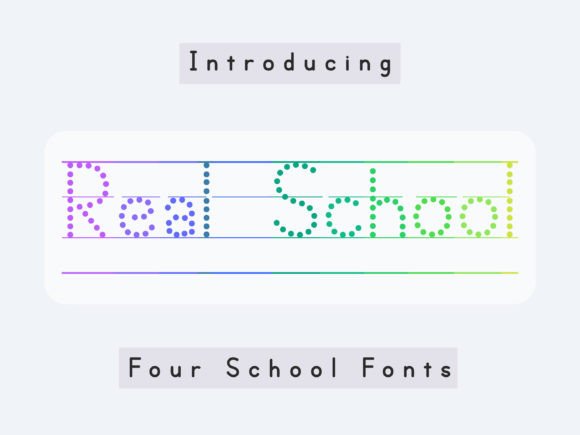
Real School is a display font that feels like it was designed by a teacher who loves the alphabet. Its soft curves and slightly uneven letterforms give it a handcrafted, playful vibe. It’s perfect for educational branding, especially for products aimed at young learners or parents looking to make learning the alphabet more engaging. The font has a warm, inviting personality that makes it ideal for school-related projects, from lesson plans to promotional materials.
When I tested it on a logo concept for an early childhood education brand, the result was exactly what I needed: friendly, readable, and full of character. It worked well in both large and small sizes, though I noticed that in very small text, the details started to blur a bit. Still, for headlines, titles, and short phrases, it shines.
Real School in Packaging Design and Product Labels
I used Real School on a packaging mockup for a line of children's books, and it added just the right amount of charm without overwhelming the design. The font’s simplicity made it easy to pair with other elements, like illustrations or background textures. It looked great on product labels, where it helped create a cohesive visual language that felt authentic and trustworthy.
One thing I appreciated was how Real School maintained its clarity even when placed against bold colors or busy backgrounds. It didn’t get lost, which is a big plus for packaging that needs to stand out on a shelf.
Real School for Social Media Graphics and Web Headers
Real School also performed well in digital spaces. I used it for a social media campaign promoting a literacy initiative, and it brought a sense of warmth and accessibility to the content. On Instagram posts and Facebook banners, it stood out as a clean, modern display font that felt personal and professional at the same time.
In web design, I tried it on a homepage hero section for a parenting blog. The font’s friendly look complemented the site’s overall tone, making it feel welcoming and approachable. It worked best as a headline font, where its personality could shine without competing with body text.
Real School in Business Cards and Print Materials
For a business card project, Real School added a unique touch that made the card feel more personal. It was especially effective when paired with a minimalist layout, where the font’s character could take center stage. I noticed that the font had a few alternate characters and ligatures, which gave me more flexibility in customizing the design.
However, I would caution against using Real School for long paragraphs or dense text blocks. Its style is better suited for short phrases, headings, and accents rather than body copy. For print materials, it’s important to test the font at different sizes to ensure readability, especially in smaller formats like business cards or flyers.
Real School for Creative Projects and Handmade Branding
As a designer who often works with handmade shops and creative studios, I’ve found Real School to be a versatile choice for branding projects that need a personal touch. It pairs well with other fonts, especially serif or script styles, allowing for a balanced and dynamic typography system.
When working on a boutique identity project, I combined Real School with a classic serif font for body text, creating a contrast that felt both modern and timeless. The result was a brand that felt authentic and professional, without sacrificing its playful spirit.
One thing to keep in mind is that Real School is a premium font, so it’s important to check the licensing terms before using it in client work. Make sure it’s suitable for commercial use, especially if you’re designing for print-on-demand products, websites, or digital templates.